When you’re in need of financial assistance, personal loans can be a convenient solution. Whether it’s covering unexpected expenses, renovating your home, or consolidating debt, personal loans provide quick access to funds without the need for collateral. However, one key aspect to watch out for is the personal loan interest rate, as it directly impacts the overall cost of borrowing.
In this article, we’ll explore how personal loan interest rates work, discuss factors that influence them, and offer actionable tips to help you secure a low rate. We’ll also touch on the concept of the effective annual rate (EAR) for a better understanding of borrowing costs.
Understanding Personal Loan Interest Rates
What Is a Personal Loan Interest Rate?
A personal loan interest rate refers to the percentage of the loan amount that lenders charge you for borrowing money. It’s essentially the cost of borrowing. It is expressed as an annual percentage rate (APR), which typically includes the base interest rate and any fees associated with the loan.
There are two types of interest rates to consider:
- Fixed Interest Rate: Remains constant over the life of the loan.
- Variable Interest Rate: Fluctuates based on market conditions or an index set by the lender.
APR vs. Effective Annual Rate (EAR)
The APR might seem straightforward, but it’s important to understand how it differs from the effective annual rate. While APR reflects the annual cost of the loan, including fees, EAR takes compounding into account. If interest accrues monthly or quarterly, EAR will provide a clearer picture of the actual cost of the loan.
Factors That Affect Personal Loan Interest Rates
1. Credit Score
Your credit score plays a massive role in determining your personal loan interest rate. Individuals with higher credit scores typically qualify for lower rates, as they are seen as less risky by lenders.
2. Loan Amount and Term
The amount you borrow and the repayment period influence your interest rate. Shorter loan terms often come with lower interest rates, while higher loan amounts might carry slightly higher rates due to increased risk.
3. Income and Debt-to-Income Ratio
Lenders assess your financial ability to repay the loan. If your income is steady and your debt-to-income ratio is low, you’re more likely to obtain a favorable rate.
4. Type of Lender
Interest rates vary between traditional banks, credit unions, and online lenders. Credit unions often offer lower rates to members, while online lenders may provide competitive rates depending on your creditworthiness.
5. Market Conditions
Economic factors can also influence personal loan interest rates. For example, during periods of high inflation or fluctuating central bank interest rates, lenders adjust their rates accordingly.
How to Get a Low Personal Loan Interest Rate
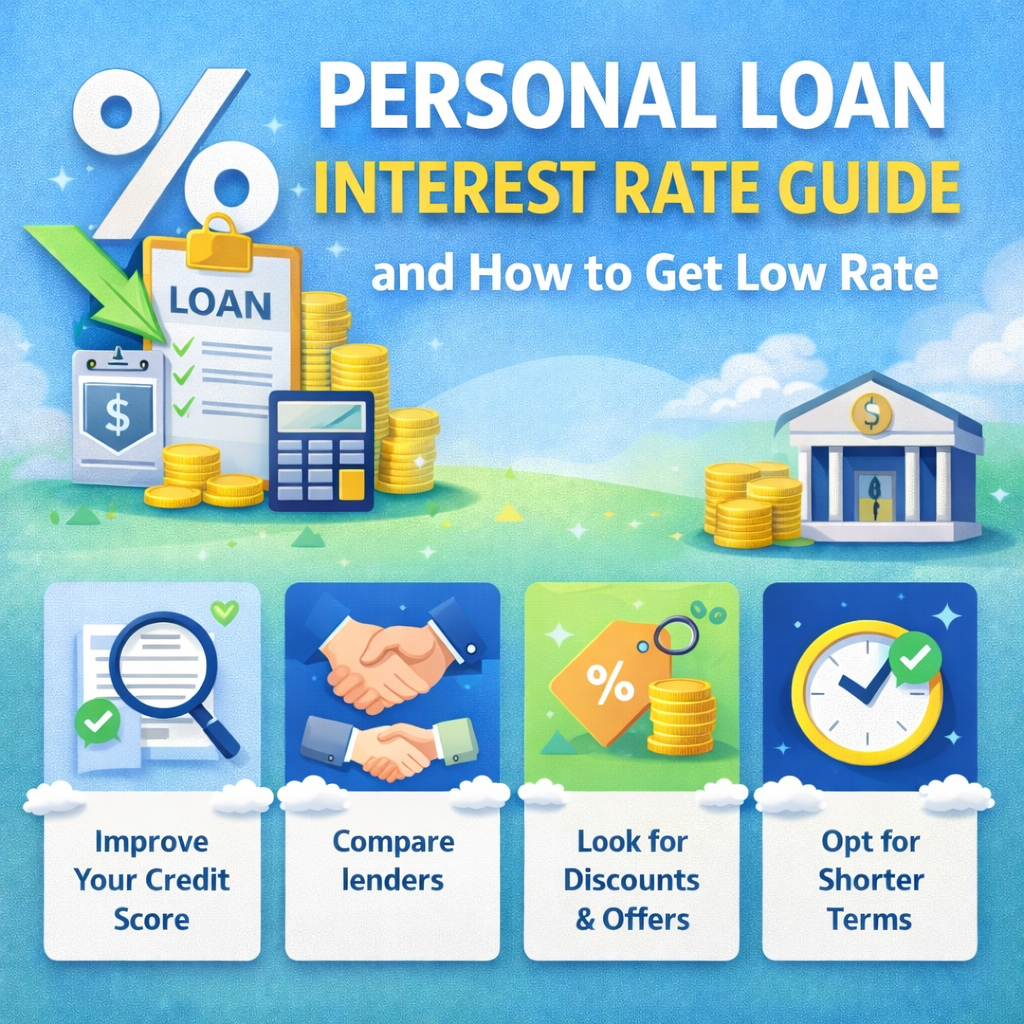
Securing a low personal loan interest rate requires preparation and smart decision-making. Follow these steps to make yourself an attractive borrower and ensure you get the most favorable rate.
1. Improve Your Credit Score
A good credit score is your ticket to securing a low personal loan interest rate. Lenders view borrowers with a high credit score as less risky, which means they may offer lower rates. To boost your score:
- Pay bills on time.
- Reduce credit card balances and avoid maxing out your credit limit.
- Check your credit report for errors and dispute inaccuracies.
2. Shop Around and Compare Offers
Don’t settle for the first offer you receive. Research multiple lenders and compare their interest rates, fees, and terms. Use online comparison tools to get a clear view of available options.
3. Consider a Co-Signer
If your credit score is not ideal, you can apply for a personal loan with a co-signer who has a strong credit history. A co-signer acts as a guarantor, which can reduce the lender’s risk and result in a lower interest rate.
4. Opt for a Shorter Loan Term
While longer loan terms may offer lower monthly payments, they typically come with higher interest rates. Opting for a shorter loan term can help you secure a better rate and save on interest payments overall.
5. Leverage Prequalification Tools
Many lenders offer prequalification tools that allow you to check what interest rate you might qualify for without impacting your credit score. This can be useful for comparing rates across multiple lenders.
6. Build a Relationship with a Lender
Some lenders may offer preferential rates to existing customers. If you already have an account at a bank or credit union, inquire about their personal loan rates and whether being a customer qualifies you for a lower rate.
7. Negotiate
Don’t be afraid to ask for better terms. If you’ve already received approval for your loan, see if the lender can offer a lower rate, especially if you’ve received competing offers elsewhere.
The Role of the Effective Annual Rate (EAR) in Loan Comparison
The effective annual rate (EAR) comes into play when lenders calculate interest on a compounding basis. Instead of simply looking at the APR, comparing loans based on their EAR provides a more accurate representation of the borrowing costs.
For example, if a loan accrues interest monthly, the EAR is higher than the stated APR because of compounding. Therefore, when comparing personal loans, consider the EAR along with the APR to understand the true cost of borrowing.
Interest Rate Range for Personal Loans
Interest rates for personal loans typically range from 6% to 36%, depending on your creditworthiness, loan term, and lender. Keep in mind that rates on the lower end of this spectrum are often reserved for borrowers with excellent credit and stable income.
Things to Watch Out for When Applying for a Personal Loan
Hidden Fees
Some personal loans come with additional fees, such as origination fees, application fees, or late payment penalties, which can increase the overall cost of the loan. Be sure to read the loan agreement thoroughly to avoid surprises.
Prepayment Penalty
If you plan to repay your loan early, check if the lender charges a prepayment penalty. Some lenders do, which can negate potential interest savings.
Teaser Rates
Certain lenders offer “introductory” rates that seem low but may increase after a specific period. Be wary of these and ask whether rates are fixed or variable.
Conclusion
Securing a low personal loan interest rate is possible with the right preparation and strategies. Start by improving your credit score, comparing offers, and understanding loan terms. Additionally, use tools like prequalification and EAR comparisons to make informed decisions.
Remember, the cost of a loan isn’t solely determined by the interest rate—fees, compounding, and loan duration also factor in. By being proactive and educated, you can minimize borrowing costs and achieve your financial goals with greater confidence.
A personal loan can be a valuable financial tool, but success depends on how you navigate the details. With this guide, you’re now equipped to take control of your borrowing decisions and secure the best interest rate possible.