
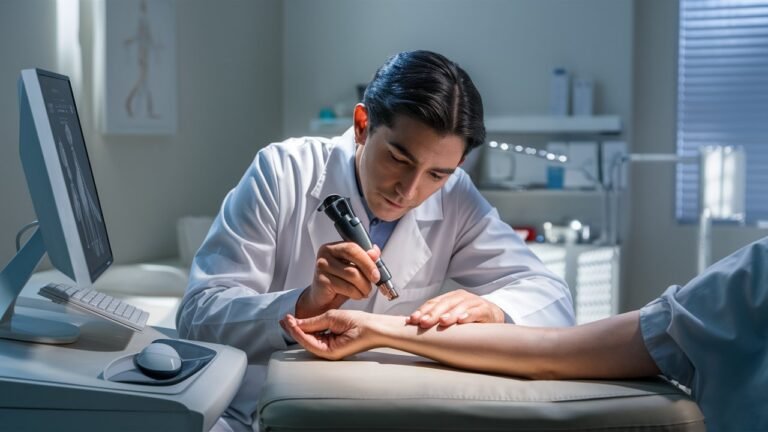
Here is something most dermatologists do not think about until it is too late. Technology operates almost every aspect of your clinic today. Appointment setting, patient documentation, invoicing, imaging studies, laboratory outcomes. All of it digital. All of it connected. And all of it vulnerable the moment your IT setup is not up to the job.
Managed IT services have become a genuine game-changer for smaller and mid-sized medical practices. Not because of flashy features. Because they handle the behind-the-scenes work that keeps your clinic running without disruption. This article looks at what that actually means for a dermatology practice day to day.
Why Dermatology Clinics Have Specific Technology Needs
Dermatology is not a simple paper-and-pen specialty anymore. You are storing high-resolution clinical images. You are managing tele dermatology consultations. You are processing insurance claims tied to complex procedure codes. And you are doing all of this while patients are walking in and out of rooms every twenty minutes.
That kind of volume puts real pressure on your systems. A slow EHR at peak hours does not just annoy staff. It delays care. It creates documentation gaps. And it quietly costs your practice time and money every single week.
IT support for dermatologists has to match that pace. Generic tech support rarely does. Someone who fixes office printers for a law firm is not prepared for the clinical urgency of a dermatology workflow.
What Managed IT Healthcare Actually Covers
The phrase is frequently applied loosely, making clarity essential. Managed IT healthcare is a service where a dedicated provider consistently monitors, supports, and maintains your entire technological infrastructure. Not just when an object is broken. Always.
Continuous System Monitoring
Your network, servers, and connected devices are observed around the clock. When a problem starts to worsen, like a faulty hard drive, a bandwidth constraint, or an unusual login attempt, it is detected and addressed before becoming a significant issue.
Many clinics under managed plans are often unaware of how many minor issues were identified and resolved behind the scenes.
Software and Security Updates
Updates are one of those things that always seem to get pushed back. Staff are busy. The timing never feels right. But outdated software is one of the leading entry points for cyberattacks in healthcare. A managed provider schedules and applies updates during off-hours so your systems are always current without any disruption to your patient schedule.
Helpdesk Support When You Actually Need It
Things still go wrong even with great monitoring in place. When they do, your staff needs fast answers from people who understand medical office environments. Not a generic call center reading from a script. Specialized IT support for businesses in healthcare means the person on the other end already knows what an EHR is and why getting it back online matters right now.
Cloud IT Dermatology Solutions: Access and Flexibility
Cloud IT dermatology setups have made a noticeable difference in how practices manage data and workflows. The core idea is that your software and storage live in secure, off-site servers rather than on hardware you own and maintain yourself.
For dermatology specifically, this matters for a few reasons. Clinical images are large files. Storing them locally fills up server space fast and makes remote access complicated. Storing imaging files and EHR in the cloud allows your doctors to examine cases from anywhere, your information is consistently backed up, and you avoid the rush to replace equipment when failures occur.
Cloud IT solutions also scale smoothly. Bringing on a new provider, launching a second site, or enhancing your tele dermatology services does not necessitate purchasing new servers or overhauling your network. The setup is adjusted by your provider, and you proceed.
The Compliance Side of Things
HIPAA regulations apply to all patient data that your clinic holds. This includes pictures, appointment records, billing information, and any communication that references a specific patient. Meeting compliance requires more than just possessing good intentions.
Healthcare IT consulting helps practices create and maintain systems that adhere to current regulatory standards. This involves suitable access restrictions, audit logs, secured data storage, and regular risk assessments. As needs change, a consulting partner keeps your configuration up to date, avoiding any unexpected issues during a review.
Your Current IT Setup Is Holding You Back Because
- Your EHR loads slowly or crashes during busy hours
- Staff regularly restart equipment to fix basic issues
- You have no documented backup and recovery process
- Security updates are applied irregularly or not at all
- Your IT support has no deals with medical software or HIPAA requirements
These are not trivial difficulties. There are risks in operations that build up over time. The longer they stay unresolved, the higher the expenses in reduced productivity, greater patient dissatisfaction, and potential compliance risks.
Concluding Reflections
Managed IT services are essential for major hospital systems, not just a luxury. They provide a cost-effective and practical option for dermatology clinics of any scale. When your technological environment is properly maintained, observed, and protected, it stops being a worry for your team and becomes a reliable asset they can depend on.
That change is more significant than many clinic owners understand until they go through it personally. Effective IT support for healthcare organizations is subtle, reliable, and nearly undetectable. Because when it functions properly, you never notice it at all.