
Every coffee bean contains natural oils and aromatic compounds that create the rich flavors people enjoy in every cup. These delicate elements begin to break down once the beans are exposed to air, moisture, heat, and light. Even premium coffee can lose its freshness within days if stored incorrectly.
Proper storage helps preserve the taste, aroma, and quality of your beans. Whether you brew coffee at home or manage a coffee business, understanding the right storage methods ensures every cup delivers the flavor you expect.
Freshly Roasted Beans Need Extra Care
Coffee reaches its best flavor shortly after roasting. During this period, the beans continue releasing carbon dioxide in a process known as degassing. While this is completely natural, improper storage during this stage can allow oxygen to enter the container and speed up flavor loss.
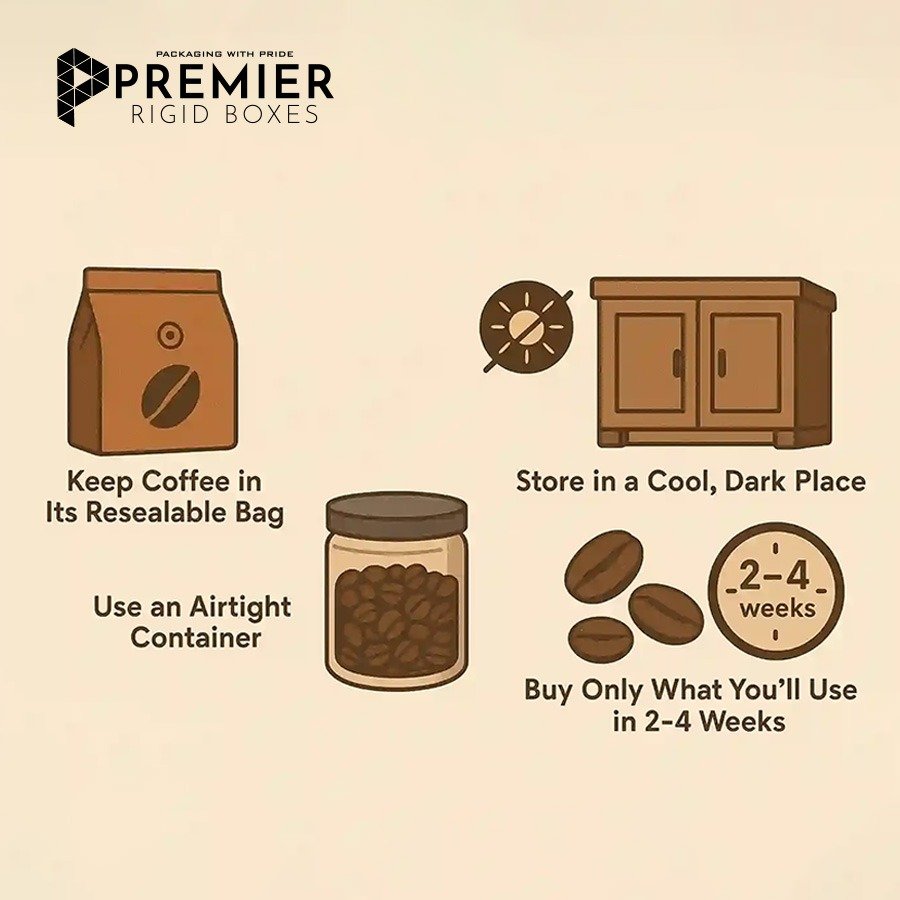
Using an airtight container immediately after opening a bag is one of the simplest ways to maintain freshness. It limits oxygen exposure while protecting the beans from outside odors that could affect their natural taste.
Keep Coffee Away from Air
Air is one of the biggest enemies of fresh coffee. Oxygen reacts with the natural oils inside coffee beans, causing oxidation. This process slowly removes the rich aromas that make freshly brewed coffee so enjoyable.
Choose containers with airtight seals made from stainless steel, ceramic, or high-quality food-safe materials. Avoid storing coffee in loosely sealed bags after opening because they allow continuous airflow that shortens freshness.
Only open the container when you need coffee, then seal it again immediately.
Avoid Heat and Direct Sunlight
Temperature plays a major role in preserving coffee quality. Warm environments speed up the breakdown of natural oils, causing beans to become stale much faster.
Store coffee in a cool, dry cabinet away from ovens, dishwashers, windows, or direct sunlight. A stable room temperature is far better than frequent temperature changes.
Transparent glass jars may look attractive on the kitchen counter, but they expose beans to light that gradually reduces flavor. Opaque containers provide much better protection.
Moisture Can Ruin Coffee Quickly
Coffee beans naturally absorb moisture from the surrounding air. Excess humidity damages their texture and changes their flavor profile.
Never store coffee near sinks, kettles, or steam-producing appliances. Damp conditions encourage the loss of freshness and may even lead to mold if moisture becomes excessive.
Dry storage areas provide the best environment for maintaining both aroma and bean quality.
Should You Refrigerate Coffee Beans?
Many people believe the refrigerator keeps coffee fresh, but this often creates more problems than benefits.
Coffee easily absorbs surrounding food odors. Cheese, onions, spices, and leftovers can all affect the taste of your beans. Frequent temperature changes also create condensation when containers move between the refrigerator and room temperature.
For daily use, a cool pantry or kitchen cabinet remains the better option.
Is Freezing a Good Idea?
Freezing can work when storing unopened coffee for longer periods, but it requires careful handling.
Divide coffee into smaller airtight portions before freezing. Remove only the amount you need instead of repeatedly thawing and refreezing the same batch. Constant temperature changes create condensation that damages bean quality.
If you purchase large quantities of specialty coffee, freezing individual portions can help preserve freshness until they are needed.
Buy Coffee in Reasonable Quantities
Fresh coffee always tastes better than coffee stored for months. Instead of buying extremely large bags, consider purchasing smaller amounts that can be used within a few weeks.
Most coffee enthusiasts recommend consuming roasted beans within two to four weeks after opening for the best flavor experience.
This approach ensures every brew delivers stronger aroma and richer taste.
Grind Only What You Need
Whole beans hold their freshness much longer than ground coffee. Once coffee is ground, thousands of tiny particles become exposed to oxygen, causing flavor compounds to disappear rapidly.
Grinding only the amount needed before brewing protects the delicate oils and preserves the complex aromas that make fresh coffee unique.
A quality burr grinder can also produce more consistent grind sizes, leading to better extraction during brewing.
Choose Quality Packaging
Coffee packaging plays an important role before the beans even reach your kitchen. High-quality bags with one-way degassing valves allow carbon dioxide to escape while preventing oxygen from entering.
For coffee brands and specialty roasters, premium packaging is equally important after production. Reliable coffee mug packaging boxes suppliers often provide durable packaging solutions that protect branded coffee gift sets during transportation while maintaining an attractive presentation for customers.
Strong packaging reduces damage during shipping and helps preserve product quality until it reaches the final buyer.
Watch for Signs of Stale Coffee
Even properly stored coffee eventually loses freshness. Recognizing the signs helps you know when it’s time to replace your beans.
Common indicators include:
- Weak aroma after opening the container.
- Flat or dull flavor during brewing.
- Oily beans becoming unusually dry.
- Noticeable loss of sweetness.
- Bitter or lifeless taste.
Fresh coffee should have a pleasant aroma before grinding and produce a balanced, flavorful cup.
Create Better Coffee Every Day
Good coffee starts long before brewing begins. Proper storage protects the delicate oils and aromatic compounds responsible for flavor, body, and fragrance.
Simple habits like using airtight containers, avoiding heat, limiting air exposure, and grinding beans only when needed can significantly improve every cup. Whether you enjoy a morning espresso, pour-over, or French press, careful storage allows your coffee to deliver its full character from the first brew to the last.
Small storage improvements make a noticeable difference, helping you enjoy fresher coffee while reducing unnecessary waste.