
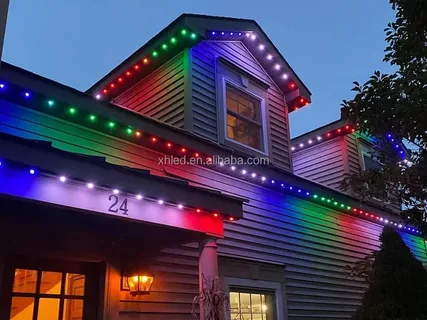
Light after the sunset is a key factor of influencing the perception and experience of spaces. In the absence of light of nature, the eye has no other option but to use artificial light to learn depth, movement and comfort. When the light is not balanced, the environments may appear to be either physically exhausting or fragmented particularly when the evening hours are lengthy. This is the reason visual balance is an important aspect in the night whether in the house, or outside the house.
In environments designed for long-term use, permanent rgb lighting contributes to a consistent visual experience after dark. Because these systems remain fixed and operate daily, their influence on atmosphere and perception becomes continuous rather than occasional. When planned thoughtfully, they maintain harmony across spaces and reduce the visual strain that often comes with uneven or excessive lighting. Understanding this relationship between light and perception allows spaces to feel composed and intentional throughout the night.
What Permanent RGB Lighting Is and How It Works
The permanent lighting systems are installed to establish them as the long-term infrastructure of a property and not as decorations. They are designed in a way that prioritizes stability, controllable output as well as predictable behavior in varying conditions. As opposed to temporary lighting setup, these systems are based on built-in controls as opposed to physical manipulation.
Permanent RGB Lighting: What It Means
The RGB lighting is premised on the use of red, green, and blue sources of light to produce a broad palette of colors. These fixtures in permanent installations are firmly mounted and tied to centralized control. The colour output, intensity and timing are digitally controlled and this has enabled uniformity each evening to another. In permanent rgb-lit spaces, the setting will have a consistent visual identity, and this is particularly crucial in areas where people are going to repeatedly be spending time after the sun goes down. This uniformity creates a non-visual consistency and a tranquil night ambience.
Components of a Permanent RGB Lighting System
A standard system consists of LED lights, controllers, wiring system and software interfaces. The lights provide uniform lighting, and controllers control the color mixing and intensity of lights in various areas. Scheduling and coordinated control of lighting is made possible through software platforms, making lighting predictable. Components are sheltered by use of durable construction and weather-resistant housing, especially where they need to be subjected to the weather conditions, which is inevitable in the outdoor use.
The Role of Visual Balance After Dark
Visual balance is the amount of evenness of the light in a space and the comfortability with which the eye perceives it. This balance is accentuated after it gets dark since artificial light determines all visible surfaces. Lighting that is either uneven or too intense may be distracting and unduly highlight certain parts.
Learning the Visual Balance Lighting
The balanced lighting does not make strong contrasts between bright and dark areas and helps the eye to move in a natural background. Distribution of light feels uniform and spaces become continuous as opposed to discontinuous. Permanent rgb lighting enables a fine control of color and brightness, and it is less difficult to maintain this balance between various zones. What has come out is an atmosphere of purpose, lighting that does not compete with the space but rather compliments it.
Human Perception and Light After Dark
At night, human eye reacts in different ways as compared to the day. The light sources become brighter and the saturation of colors becomes more apparent. The cooler shades are sharper, whereas the warmer shades are calmer especially in low-light. It is important to learn about these perception and use it in planning the night lighting. Controlled adjustment systems are more compatible with the real experience that people get of light after the sun has gone down.
Applications of Permanent RGB Lighting
Permanent RGB lighting is employed in a very broad spectrum, including homes and places of worship shared and business. Every application has to be thought-over so that it does not overpower the environment.
Indoor Environments
Interior areas have relied on the lights that are stable and comfortable during the night. Residential buildings usually need some lighter shades that would encourage a person to relax, whereas the working environment should be clear but not glaringly bright. It has the advantage that entertainment zones are characterized with overlaid lighting between ambient lighting and focal points. Permanent rgb lighting is also suitable to such different requirements since it can be adjusted to the color and the intensity without any physical alteration to the installation..
Outdoor Areas
There are other variables involved in outdoor conditions such as surface reflectivity and weather exposure. The walkways should be visible all the time, and the patios and meeting places should be well-lit and welcoming during dark hours. Fixed RGB systems are very reliable in terms of output even with changes in seasons. Their stability and ability to have color consistency enable the outdoor areas to have a visual order even during the night.
Balancing Color, Brightness, and Context
Visual balance is achieved through coordination of choice of color, amount of brightness, and the environment. When these aspects are not in harmony, then lighting may result in distraction instead of being harmonious..
Choosing the Right Color Settings
The central elements of the perception of spaces at night are color. The colors of the accent are not very effective, whereas neutral tones tend to be quite calming and are to be used selectively. Essentially bright colors may take over the visual eye power and disorientation. Permanent Systems Permanent systems enable progressive color changes that keep the consistency and adapt to the various nighttime settings.
Brightness Levels and Eye Comfort
Light must be in line with the size and use of any space. Extremes in brightness will bring about glare and visual exhaustion whereas inadequate brightness will decrease the clarity. Layered lighting methods spread the light in a more even way and they blur the boundary between areas. This balance helps in making the eye comfortable when you are using it long at night.
Compatibility With Daily Use
The lighting during the night is usually on over a long duration and hence the continuity is very vital as compared to the drama. Light patterns are expected to generate familiarity and cause less visual strain. Preset schedules provide constant production during the evening. Permanent systems are built in such a way that they become part and parcel of everyday operations and do not require manual adjustments every other day.
Practical Considerations Before Installation
The quality of lighting in the long-term is greatly reliant on the decisions taken at the planning stage. All spaces have different visual and structural conditions that determine the performance of lighting at night.
Assessing the Space and Purpose
Lighting behavior is influenced by room dimensions, surface material and pattern of use. Brightness is enhanced by the surfaces of reflections, and darker finishes absorb light. Knowledge of the use of a space at night helps to understand the proper color and intensity selection. This assessment phase helps it to avoid imbalance when the system is regularly used..
Installation Layout and Placement Tips
Visual rhythm and distribution of shadows are provided by the positioning of fixtures. The spacing determines the evenness of the light on the surfaces, whereas the height of the mounting determines the brightness that is perceived. The integration of the new fixtures with the existing ones ensures a continuity of the visual image instead of discontinuous lighting spaces.
Energy and Maintenance Factors
Systems that work at night are also still concerned with energy efficiency. LED based fixtures minimise long term power requirements whereas high quality parts would increase the service life. Stable systems will have a stable visual balance with minimal incidences of maintenance cuts.
Common Challenges and How to Address Them
Even well thought out lighting systems can be faced with issues as the environment is changing. The identification of these problems helps to make adjustments in time, maintaining the balance.
Avoiding Harsh Lighting Scenarios
Intrusive lighting can be caused by an over-bright or improper position. Strong contrasts are not comfortable in the dark and take away attention in the whole space. Zoning and gradual transitions of intensity minimizes visual shock and ensures the calmness.
Dealing With Color Conflicts
The visual clarity is reduced when several colors are competing in one and the same place. The use of restricted colors at any given time and use of uniform palettes enhance unity. Lighting is kept easy and easy on eyes with good color coordination.
Conclusion:
Visual balance determines the mood of an environment at night and affects the comfort and perception. Considerable lighting choices harmonize color, intensity and context in the long run. Permanent rgb lighting has unvarying control of areas that are used every night, which is harmonious and does not cause visual disturbance. Lighting can be a subtle element of deliberate design when used in a moderate and planning way instead of a major characteristic.
FAQs
What is the best way to choose lighting for indoor spaces?
Take into account purpose, size, and decoration of the room. Brightness and color should be matched with the activity to make it comfortable and clear.
How can outdoor lighting remain effective in different weather conditions?
Choose long-lasting, weather proof fixtures and materials. The right position will decrease the exposure to the wind, rain, and the sun.
Why is layering lighting important in any environment?
Layered lighting creates balance of brightness and illumination of key areas. It does not allow too sharp contrasts but gives a comfortable effect.
How often should lighting setups be reviewed or adjusted?
Functional checks and cosmetic checks are made periodically. There can be the need to make some adjustments within the spaces when patterns of use vary.