
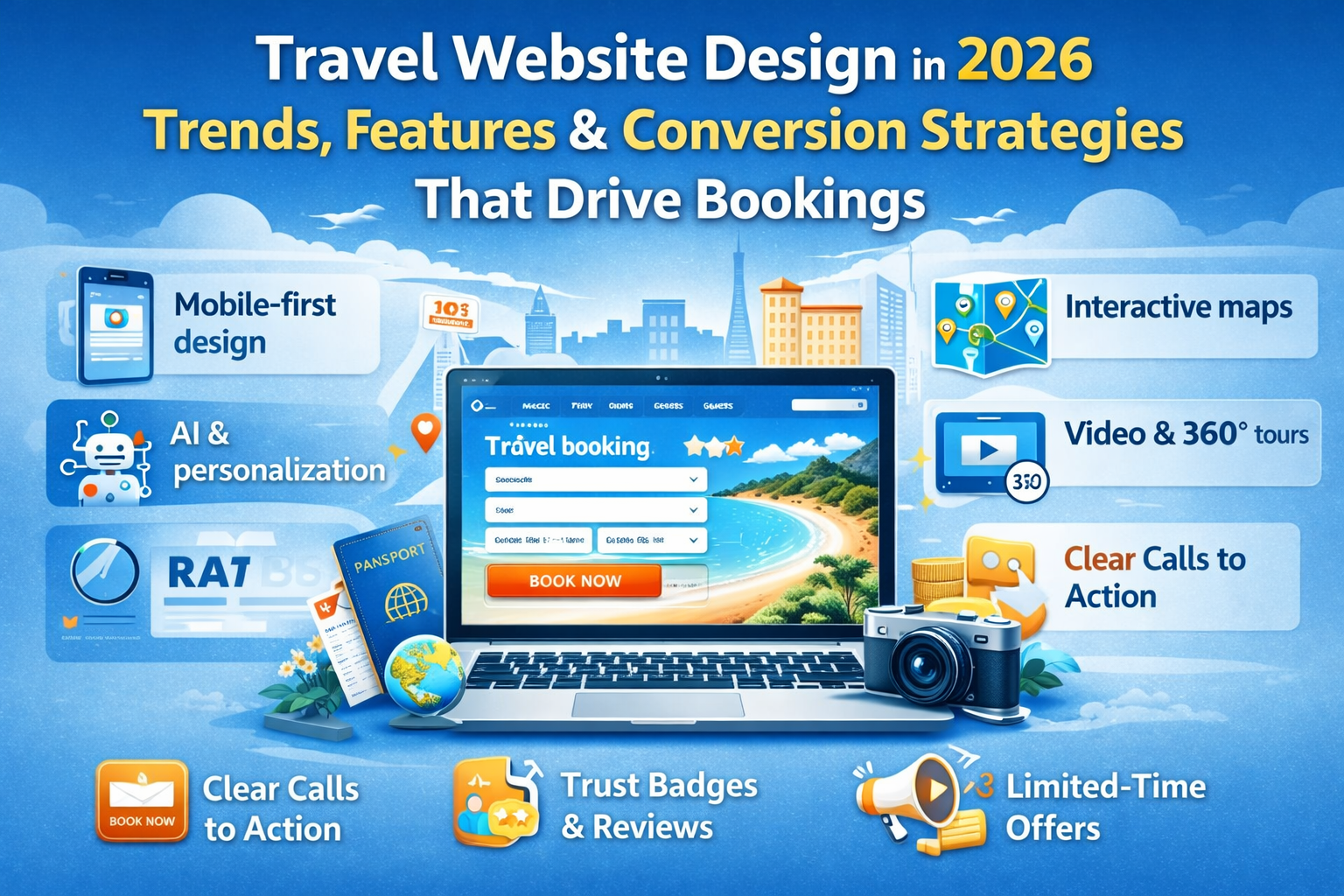
The travel industry has evolved dramatically in the last few years.
In 2026, travelers don’t just look for destinations.
- They look for experiences.
- They look for trust.
- They look for seamless booking.
And all of that starts with your website.
Whether you’re a travel agency, tour operator, luxury resort, adventure brand, or tourism board your website is your primary conversion engine.
This guide breaks down everything you need to know about travel & tourism website design in 2026, including:
- Modern design trends
- Must-have features
- UX strategies
- Booking optimization
- SEO best practices
- Real-world inspiration
Why Travel Website Design Matters More in 2026
Travel is emotional.
People don’t just buy flights or hotel rooms — they buy dreams.
But here’s the reality:
If your website looks outdated, loads slowly, or feels confusing, users won’t hesitate to leave.
Today’s travelers expect:
- Lightning-fast load times
- Mobile-first browsing
- Immersive visuals
- Instant booking
- Transparent pricing
In 2026, trust is built in seconds.
2026 Travel Website Design Trends
Let’s look at what’s actually working right now.
1. Immersive Visual Storytelling
High-resolution imagery is no longer enough.
Travel websites now use:
- Full-screen hero videos
- Drone footage
- Subtle motion effects
- Cinematic typography
Luxury brands like Airbnb have mastered storytelling through immersive imagery and experience-driven design.
The goal?
Make users feel like they are already there.
2. AI-Powered Personalization
Smart recommendations based on:
- User location
- Browsing history
- Budget preferences
- Travel interests
Platforms like Booking.com use AI to personalize search results and improve conversions.
In 2026, personalization isn’t optional — it’s expected.
3. Mobile-First, Thumb-Friendly Layouts
Over 70% of travel bookings now begin on mobile.
Your website must:
- Use large tap targets
- Keep forms short
- Avoid heavy popups
- Prioritize speed
If your travel website isn’t optimized for mobile, you’re losing revenue daily.
4. Minimal Navigation, Maximum Clarity
Travel websites used to overwhelm users with menus.
Now the trend is:
- Clean header
- Clear CTA
- Focused booking funnel
- Fewer distractions
Less friction = more bookings.
Must-Have Features for Travel & Tourism Websites
Design attracts.
Features convert.
Here’s what every travel website must include in 2026:
1. Advanced Search & Filtering
Allow users to filter by:
- Price
- Location
- Duration
- Activities
- Ratings
- Availability
Search should feel effortless.
2. Real-Time Booking Engine
Integration with:
- Hotels
- Flights
- Tour availability
- Payment gateways
Seamless checkout reduces abandonment.
3. Interactive Maps
Interactive maps enhance exploration.
Companies like Expedia use map-based browsing to improve user engagement.
Map browsing = longer session time = higher conversion.
4. Trust Signals
Include:
- Reviews
- Testimonials
- Certifications
- Secure payment badges
- Clear refund policies
Social proof builds confidence.
5. Multi-Language & Multi-Currency Support
Tourism is global.
Your website should adapt to:
- International audiences
- Local currencies
- Regional pricing
Conversion Optimization for Travel Websites
Attractive design is only half the equation.
Here’s how to turn visitors into bookings.
1. Emotion-Driven Headlines
Instead of:
“Explore Bali”
Try:
“Wake Up to Ocean Views in Bali’s Most Stunning Villas”
Paint a picture.
2. Strategic CTA Placement
Place booking buttons:
- Above the fold
- After testimonials
- After package details
- In sticky navigation
Clear CTAs improve conversion dramatically.
3. Simplified Booking Forms
Long forms kill conversions.
Keep it minimal:
- Travel dates
- Number of guests
- Basic details
Everything else can come later.
4. Transparent Pricing
Hidden fees destroy trust.
Always show:
- Total cost breakdown
- Taxes
- Cancellation terms
SEO Strategy for Travel Websites in 2026
Ranking for travel keywords is competitive.
Here’s what works now:
1. Destination-Based Content Pages
Create pages like:
- “Best Places to Visit in 2026”
- “Top Adventure Tours in Costa Rica”
- “Luxury Resorts in Maldives”
Long-tail keywords convert better.
2. Blog Content Marketing
Travel guides drive organic traffic.
Educational content builds authority and improves ranking.
3. Technical SEO Optimization
- Fast loading speeds
- Optimized images
- Structured data
- Clean URLs
- Core Web Vitals compliance
Performance directly impacts ranking.
Travel Website Design for Different Business Types
Travel Agencies
Focus on:
- Package listings
- Easy inquiry forms
- Destination highlights
Tour Operators
Prioritize:
- Itinerary breakdown
- Visual storytelling
- Reviews
- Booking CTAs
Hotels & Resorts
Highlight:
- Room galleries
- Amenities
- Virtual tours
- Instant reservation
Tourism Boards
Focus on:
- Destination promotion
- Events calendar
- Local attractions
- Cultural storytelling
Common Mistakes to Avoid
Even in 2026, many travel websites still make these errors:
❌ Slow-loading heavy images
❌ Complicated navigation
❌ Hidden pricing
❌ No mobile optimization
❌ Weak CTA placement
❌ Outdated visuals
Every friction point reduces bookings.
How Long Does It Take to Build a Travel Website?
Timeline depends on complexity:
- Basic travel website: 3–5 weeks
- Custom booking platform: 6–10 weeks
- Enterprise tourism portal: 10–16 weeks
Planning and UX strategy are critical phases.
The Future of Travel Website Design
Here’s what’s coming next:
- AI trip planners
- Voice-based search
- Immersive 3D previews
- AR hotel walkthroughs
- Predictive pricing models
Travel websites are becoming experience platforms, not just booking systems.
Final Thoughts
In 2026, travel website design is about one thing:
Turning inspiration into instant action.
Your website must:
- Inspire
- Build trust
- Reduce friction
- Simplify booking
- Work flawlessly on mobile
- Load instantly
Because in the travel industry, hesitation means lost revenue.
If your website doesn’t create excitement within 5 seconds, your competitor’s will.